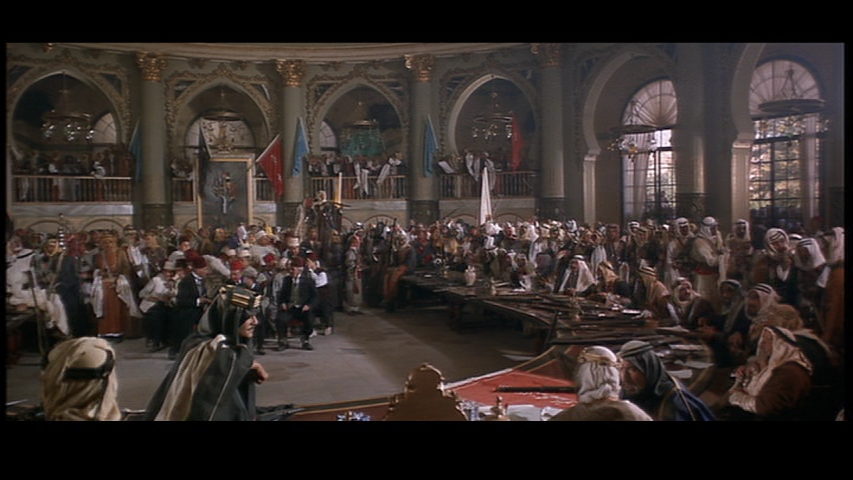
This man is not about to yield to the junior service.
“Seven Days in May”, of 1964, (dir. John Frankenheimer, from Rod Serling’s screen adaptation of the novel) tells a story of inter-service rivalry in the middle years of the Cold War. Burt Lancaster plays USAF Gen. James Mattoon Scott, appointed to the Chairmanship of the Joint Chiefs of Staff by deeply unpopular President Jordan Lyman (Frederick March) in a calculated affront to the Navy Department. The Navy is able to maneuver Lancaster into attempting an ill-conceived coup by playing to his vanity, before undermining him (and, as a bonus, the other service chiefs) with a suspiciously well-timed confession delivered by VADM Barnswell (John Houseman). A misguided romantic subplot does not detract from this subtle tale of political intrigue.
Been playing around with the <CANVAS> tag. Overall, it works pretty well. However, there was this little bit o’ joy: The transforms are all based on 32-bit floats. (See the WebKit code, e.g. translate, transform, &c.) Since 32-bit floats only give you 23 bits of mantissa, you have to be careful when working with very large domains.
Converting all your coordinates to be relative to your viewport origin (in 64-bit JS) seems to work OK, although it is a bit hacky.
I’m not sure why someone would decide to use 32-bit floats in this context — “this context” being a browser that must also support JavaScript and its 64-bit floats. Maybe some mobile platforms don’t support double-precision FP, and so this was written to the lowest common denominator.
I recently stumbled across this page, which describes a very early computer game (in fact, a heavily-qualified “first”). The page included a link to scans of the original machine code. The page also included this portentous sentence:
It has been suggested that the intact program in the manuscript be replicated and made into an emulation of the game to run on modern hardware.
So, being highly suggestible, and apparently having no other demands on my time, that’s exactly what I did. (To be fair, I was also sort of curious about just how fast modern computers and JS engines had gotten. Was it feasible to do instruction-level emulation of early hardware in a browser? Yes. Yes, it was.)
I hope you enjoy the game. Thanks to Richard Adams for answering some of my questions, and to Scott Adams for writing the game and (hopefully) not suing me. Since this sucked up a disproportionate amount of my time, you can expect some followup posts milking this little exercise for all it’s worth.

Brilliant, but hideous
In 1949′s “The Fountainhead”, Gary Cooper plays Howard Roark, a brilliant engineer and terrible architect. Roark offers a Faustian bargain to the city of New York; he will solve their most pressing civil engineering problems, but only on condition that they permit him to ruin their skyline. When the city fathers attempt to renege on the deal, Roark’s revenge extracts a terrible toll on both the city at large and those closest to him. From a screenplay by Ayn Rand, adapting her own novel.
Possibly the first in a continuing series.

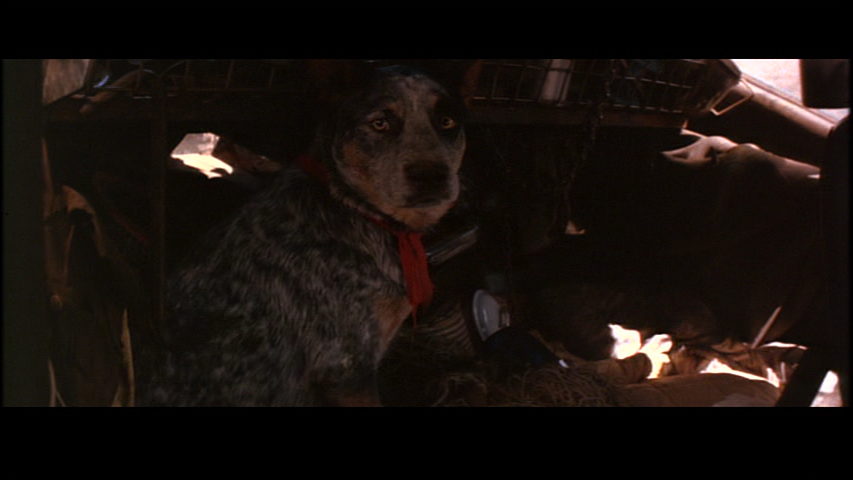
The protagonist of "The Caine Mutiny"
1954′s “The Caine Mutiny” (directed by Edward Dmytryk) tells the story of aging nightclub “singer” May Wynn’s (May Wynn, nee Donna Lee Hickey) attempts to secure a marriage to a young, handsome, but somewhat dim scion of a prominent family. Her plans are consistently frustrated by the fecklessness and weakness of her chosen target, Ens. Willie Keith (Robert Francis). Trouble begins almost immediately, when Keith’s commander is able to maneuver him into turning down a beneficial promotion (arranged by his father) to the Admiral’s staff, and grows worse when he is unable to confront his family’s disapproval of Mae. Finally, he finds himself a pawn in a mutinous plot launched by one of his fellow officers, which threatens to destroy Mae’s last chance at escaping her disreputable past.
I was just looking over some old records, and discovered something that, at the time, escaped my attention.
Between early 2002 and mid-2007, my cable company (AT&T) raised my rates for the same service by about $35/mo, or nearly 50%. Naturally this was done bit by bit — a dollar this month, 5 dollars that month, &c. Discovering this filled me with rage, and made me regret not canceling the service years earlier than I did.
That’s the last money you’ll get from me, you sneaky SOBs.
Better the rule of law than the rule of men.
But better the rule of men than the rule of lawyers.
I can’t recall if I mentioned it or not, but I spent a good bit of time looking for work when I was in Colombia … not there, but here. Between the Internet and Skype you can do 80% of your job search without even setting foot in the US. It worked out, and since mid-May I’ve been working at Motorola on the MotoCast team.
(Do I really need to mention that everything I say here is on my own account, and not on behalf of Motorola Mobility, Inc.? Yes? Well, consider it said.)
Req
Now I’m on the other side of the table, and looking to hire. So if you’re a sharp engineer, I’d like to hear from you. Nice-to-haves include Java, mobile, multimedia (GStreamer, transcoding, &c.), and server-side, but the real requirement is great coding chops.
What’s In It For You?
Relative to some of the criteria I’d laid out for what makes a good job, I can tell you that you’ll be working with “hot” technologies (mobile, “cloud”), writing a marketable language (mostly Java, some Ruby, and as much Python as I can sneak in), and solving important problems on an important product.
Compensation is good, work arrangements are flexible, and the people are agreeable. If you live and work on the San Francisco peninsula, please send me your resume. (Helpful resume writing tips here.)
So, Britain’s GCHQ (the UK’s equivalent of the NSA) has put up a programming contest to attract coders. (The punchline is that the gig only pays $39,000, so good luck with that, chaps.) There are several parts, and the only one that appealed to me required the user to implement a little VM. Since I’m a sucker for simple machines, I thought I’d give it a go. (The original puzzle is here.)
Continue reading →
The FARCs top dog just got killed. Couldn’t happen to a nicer guy.
Peace
The funniest thing about this story is the following comment from the link:
Five Decades and the fighting’s still on? With all the killings and maimings and bombings on all sides aside, can’t someone or group or neutrals come up with some form of negotiated settlement and permanent solution to this “cancer” in the innards of Colombia?
You gotta love fools like this. The solution is victory, and today it is one step closer.
Prosperity
Incidentally, it is my view that in 50 years Colombia will be the preeminent country in Latin America. “What about Brazil?” you ask. Well, in Brazil they elect leftist guerrillas, and in Colombia … well, they deal with them differently. This difference will tell over time.
In that connection, I’d like to mention in passing how delighted I was to see the Colombian FTA finally signed. Long overdue.